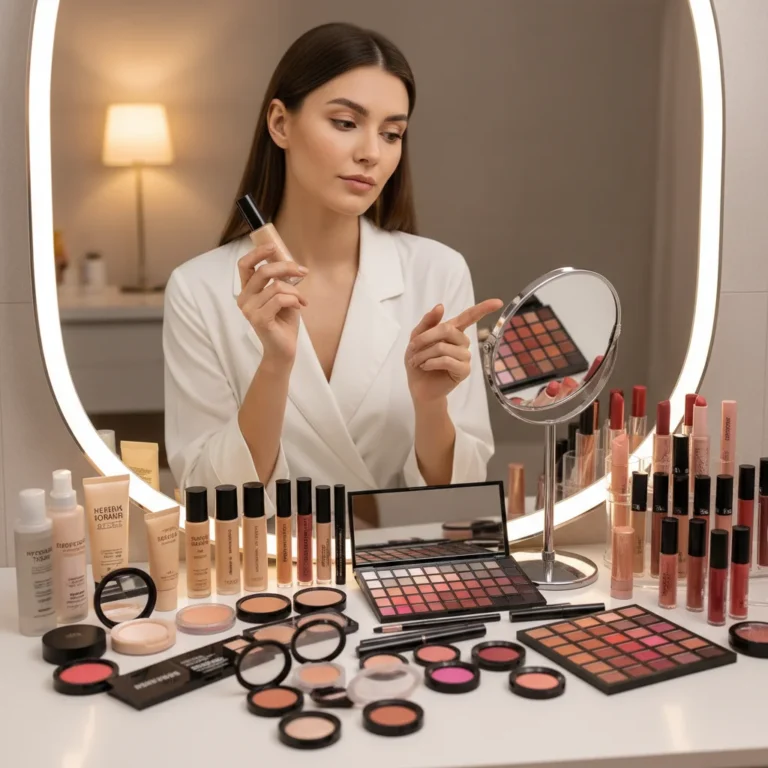
Building a makeup routine does not mean you need a large collection of products or a complicated series of steps. A good routine should make getting ready easier while helping you create the look you want.
The key is to build your routine around a few essential stages: prepare your skin, create an even base, add definition and color, finish your eyes and lips, and set everything when needed.
If you are new to makeup, having a consistent routine can also make it easier to decide what you actually need. Instead of buying products at random, you can build your collection around the steps you regularly use.
This makeup routine step by step guide covers seven essential stages and explains how to adjust them for everyday makeup, more polished looks, and different personal preferences.
Following a makeup routine step by step can make it easier to decide which products you actually need and which steps you can skip.
Step 1: Start With Skin Prep
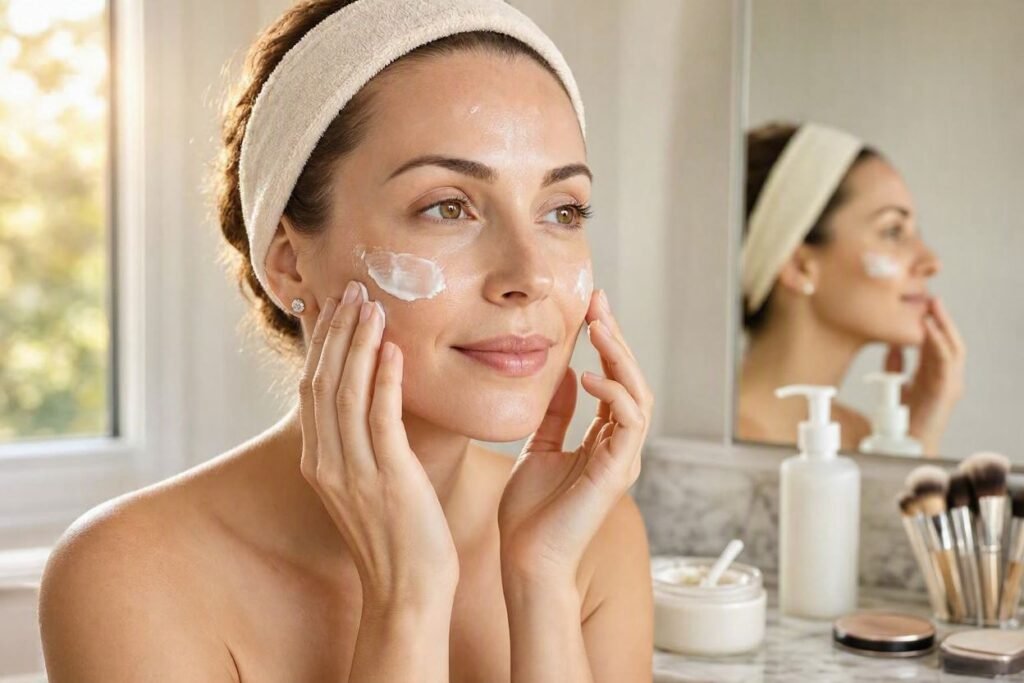
Good makeup starts before you apply any makeup at all. Preparing your skin gives you a clean, comfortable surface and can make the rest of your routine feel easier.
You do not need an elaborate skincare routine immediately before applying makeup. For most people, the goal is simply to start with clean skin and use the skincare products your skin already needs.
Keep your prep simple
A basic pre-makeup routine may include:
- Cleansing when needed
- Moisturizing
- Sunscreen during the day
Let your skincare products settle before moving on to makeup. If you apply several layers immediately one after another, products may not have enough time to absorb or settle, which can make makeup feel heavier or cause some products to pill.
Your skin should feel comfortable rather than excessively wet, greasy, or tight before you start applying makeup.
If you already have a skincare routine that works for you, there is no reason to replace it simply because you are starting a makeup routine. Makeup should fit into your existing routine rather than require you to completely change it.
You can also browse our Makeup category for more makeup-related guides as you build your routine.
Think about what your skin needs
Your routine may change depending on how your skin feels that day. For example, you may want a little more moisturizer when your skin feels dry, while you may prefer lighter layers when your skin feels oily.
The important point is consistency. A simple routine that you can comfortably repeat is usually more useful than a complicated one that takes too long or uses products you do not really need.
Step 2: Apply Primer
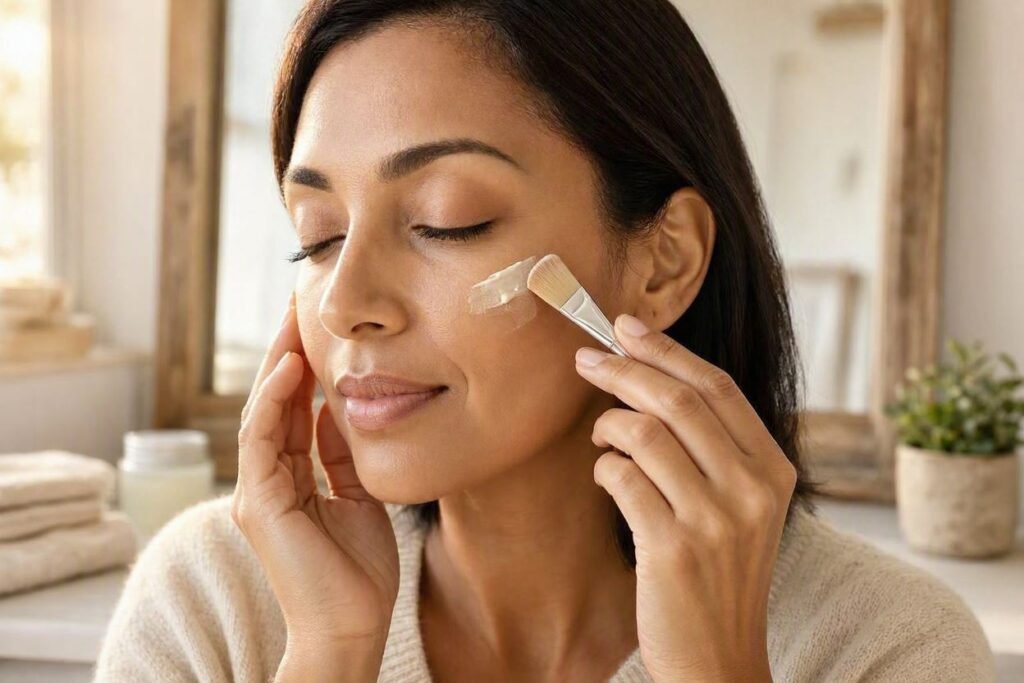
Primer is an optional step, but it can be useful when you want to create a smoother base before applying complexion makeup.
Rather than assuming everyone needs primer, think about what you want it to do. Some primers are designed to provide a smoother surface, while others are formulated to add hydration or help control shine.
Use a small amount and concentrate it on areas where you want the most benefit. You do not necessarily need a thick layer across your entire face.
Choosing a primer
The best primer for your routine depends on your preferred finish and the rest of your makeup. If your foundation already performs well without primer, you may not need to add another layer every day.
If you want to experiment with primer, Cinema Secrets Ultimate Foundation Primer is one option to consider.
Use primer after your skincare has settled and before your complexion products. Give it a brief moment to settle before continuing with your makeup.
The goal is to create a better starting point, not to create another heavy layer between your skin and foundation.
Step 3: Create Your Base
Once your skin is prepared, you can create the base for the rest of your makeup.
This is where foundation and concealer can be useful, but the amount you use should depend on the coverage you actually want.
For everyday makeup, you may prefer a lighter base that allows some of your natural skin to remain visible. For a more polished occasion look, you might choose more coverage.
Start with less
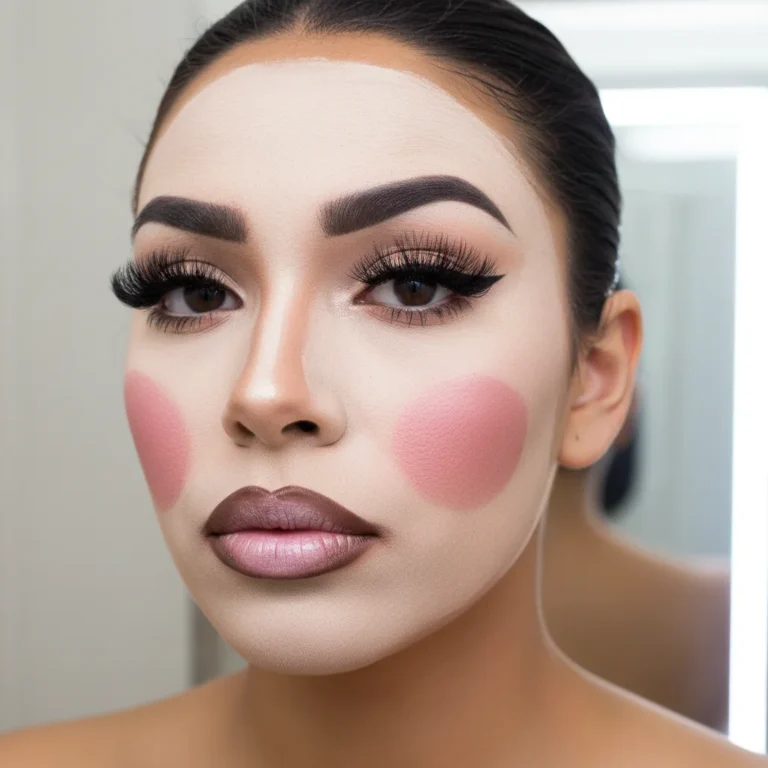
One of the easiest ways to make a makeup routine look heavy is to begin with too much product.
Instead, start with a small amount of foundation and add more only where additional coverage is needed. The same principle applies to concealer.
This approach gives you more control over the final result and makes it easier to keep the makeup looking natural.
Keep the base balanced
Your complexion does not have to look completely uniform to look polished. Some natural variation in skin tone and texture is normal.
Focus on creating an overall even appearance rather than trying to cover every small mark.
Pay particular attention to transition areas such as the jawline and hairline. These areas should blend naturally into the surrounding skin.
Your base is there to support the rest of your routine. It should not become the only thing people notice about your makeup.
Step 4: Add Color to the Face
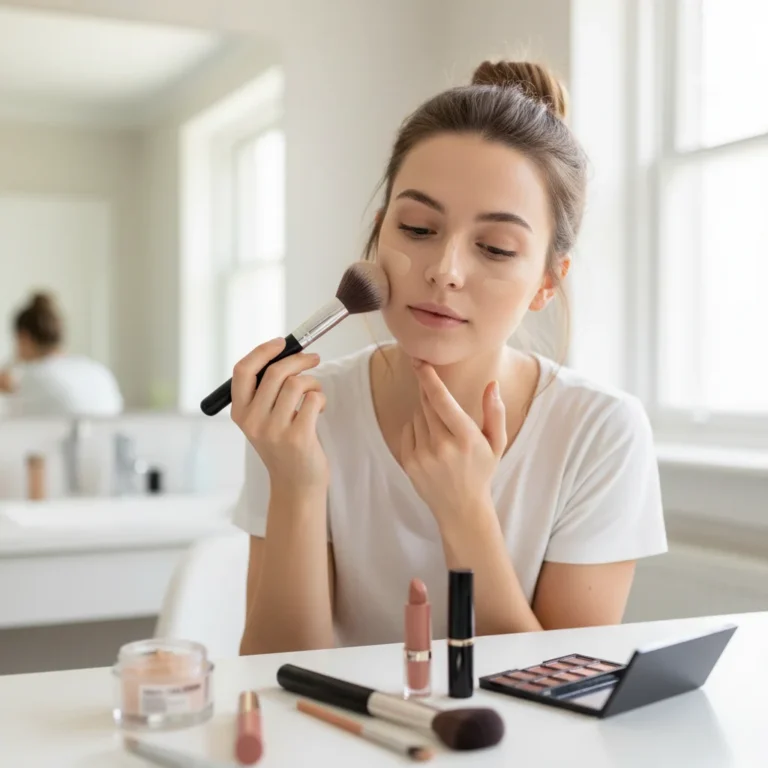
After creating your base, the next stage is bringing some dimension and color back to the face.
This is where products such as blush, bronzer, and highlighter can become useful. You do not have to use all three.
Choose what your look needs
Blush can add a fresh, healthy-looking touch of color. Bronzer can add warmth and subtle definition, while highlighter can bring attention to selected areas.
For an everyday routine, you may only want blush. On another day, you might prefer blush and bronzer together. A more finished look can include all three.
The idea is to choose products based on the result you want rather than treating every product as mandatory.
Build gradually
Face color is generally easier to add than to remove. Start with a small amount and assess the result before adding more.
This is particularly useful when you are still learning which shades and finishes work best for you.
Your makeup routine should also take the occasion into account. A soft amount of color may be ideal for daytime, while you may want stronger definition for an evening look.
You do not need a completely different routine for every occasion. Often, you can create a different result simply by adjusting the intensity of a few steps.
Step 5: Define Your Eyes and Brows
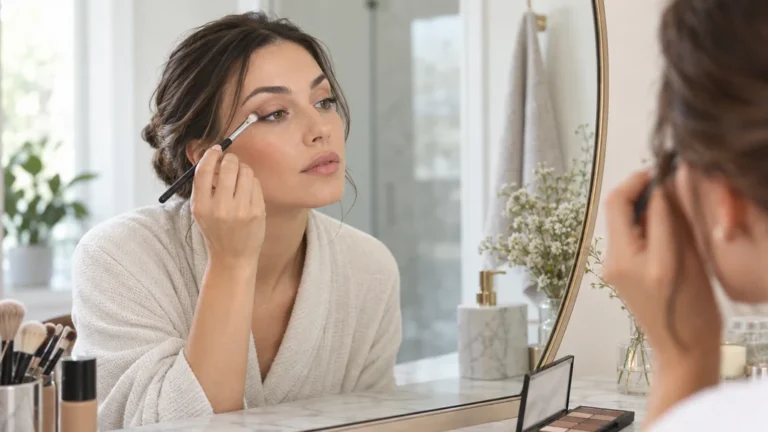
Once your face makeup is in place, move on to the eyes and brows.
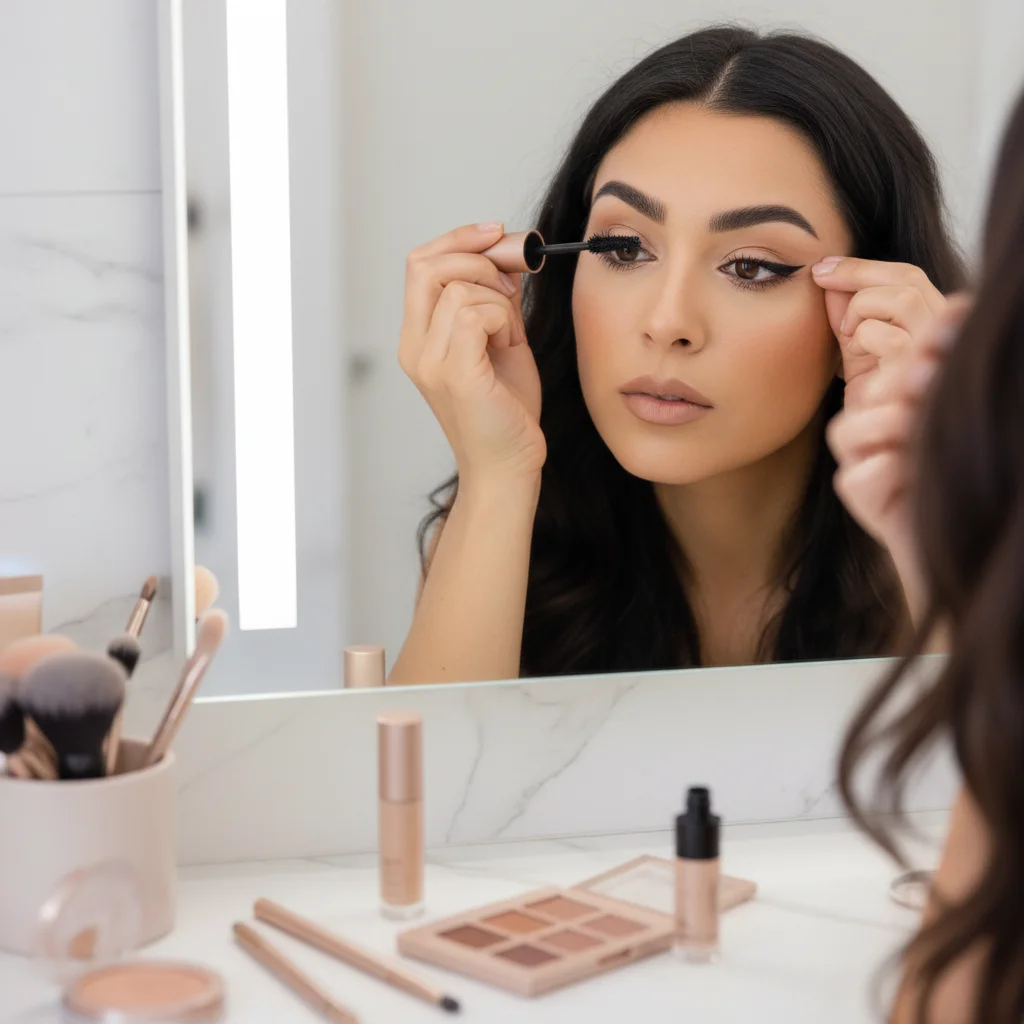
This part of your routine can be as simple or as detailed as you want. You do not need to use every eye product every time you apply makeup.
Keep Your Eye and Brow Step Simple
For a quick everyday routine, you might choose:
- Light brow definition
- Mascara
- A simple eyeshadow look
If you want more definition, you can add eyeliner or build a more noticeable eyeshadow look as part of your routine.
Your brows can also change the overall appearance of your makeup without requiring a large number of products. The goal is usually to define their natural shape rather than create an entirely different shape.
Pay attention to makeup hygiene
Because eye products are used close to a sensitive area, good makeup hygiene is important. The FDA recommends using cosmetics near the eyes only as intended, avoiding shared makeup, and replacing eye makeup if you develop an eye infection. It also advises against adding water or saliva to mascara because this can introduce germs. For more practical guidance, see the FDA’s guide to using cosmetics safely.
Keep your eye products closed when they are not in use and avoid using products that have noticeably changed in smell, color, or texture. These simple habits do not need to complicate your routine; they are simply part of using makeup responsibly.
Step 6: Finish With Lip Makeup
Lip makeup is one of the easiest parts of a routine to adjust.
You can keep it very simple with a tinted lip product or gloss, or create a more defined look with lip liner and lipstick.
Match the intensity to your look
If your eye makeup is subtle, you may want a stronger lip. If your eyes are more defined, a softer lip can create balance.
There is no requirement to use multiple lip products. Choose what makes sense for the look you are creating.
Lip liner can provide definition around the lips, while lipstick provides color. Gloss can be used when you want a shinier finish.
For a quick everyday routine, you might only need one lip product that is easy to apply and comfortable to wear.
Keep your routine practical
If you are building a makeup collection from scratch, focus first on products you know you will use regularly.
There is little benefit in buying several shades or finishes simply because they are popular. A few products that work with your everyday style can form the foundation of a much more useful makeup collection.
Step 7: Set Your Makeup
The final step is deciding whether you need to set your makeup.
Setting products can be helpful when you want your makeup to remain comfortable and presentable for longer, but they are not essential for every routine.
Setting powder
Setting powder can be useful when you want to reduce shine or keep certain areas from feeling too oily.
Instead of applying a heavy layer everywhere, use it where you actually need it. This can help preserve a more natural appearance.
Setting spray
Setting spray is another option for finishing your makeup. Some people prefer the way it helps the different layers of makeup look more cohesive.
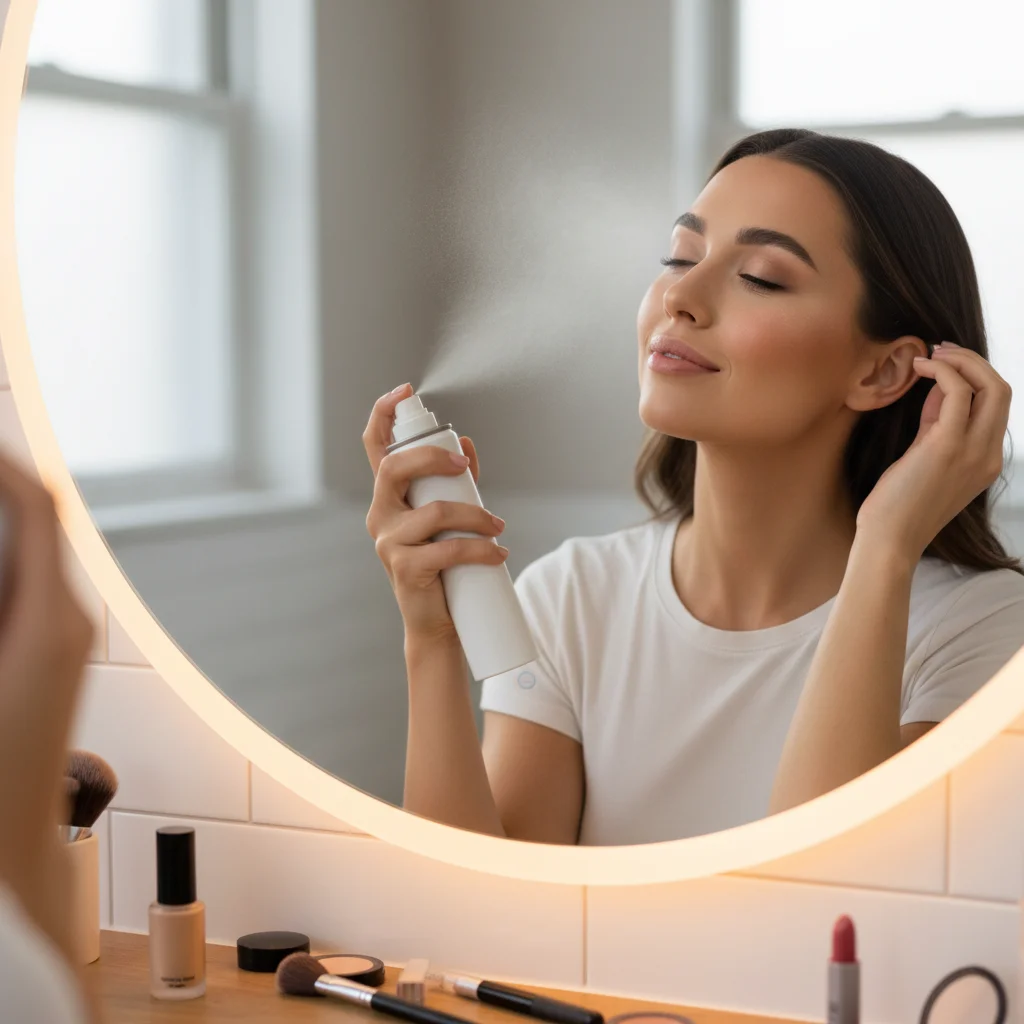
You do not automatically need both powder and setting spray. Your choice can depend on your skin, the products you have already applied, and the finish you prefer.
The final step should complete your routine rather than add unnecessary product.
How to Customize Your Makeup Routine
| Makeup routine | What to focus on |
| Quick everyday routine | Fewer products and light coverage |
| More polished look | Build coverage and add more definition |
| Natural-looking makeup | Light layers and subtle color |
| Longer wear | Primer and setting products when needed |
The seven steps above provide a useful framework, but your personal routine does not have to look exactly the same every day.
A makeup routine should fit your schedule, the occasion, your preferences, and the amount of makeup you actually enjoy wearing. A step-by-step makeup routine can be as simple or detailed as you want, depending on how much time you have and the look you want to create.
If you have acne-prone skin, your product choices may also matter. The American Academy of Dermatology recommends choosing makeup labeled oil-free or non-comedogenic when cosmetics appear to contribute to breakouts. Makeup for acne-prone skin may require a slightly different approach to product selection.
For a quick everyday routine
You might keep your routine to:
- Skin prep
- Primer, if needed
- Light complexion makeup
- Blush or bronzer
- Brows and mascara
- Lip product
Setting can be added when you need it.
For a more polished look
When you have more time, you can use all seven stages and spend more time refining the overall finish.
You might build slightly more coverage, add more definition to the eyes, or choose a stronger lip color.
The important thing is that the same basic routine still works. You are simply adjusting the intensity.
When you want a natural look
A natural-looking routine does not necessarily mean skipping makeup altogether. It can mean using fewer products and lighter layers.
For example, you might use a small amount of complexion makeup, subtle blush, mascara, and a natural lip color.
The result comes from controlling the amount of product rather than following a completely different system.
Common Makeup Routine Mistakes to Avoid
Even a simple routine can become frustrating if you make a few common mistakes.
Using too much product
More makeup does not automatically create a better result. Start with small amounts and build only where necessary.
Adding unnecessary steps
You do not have to use every product you own. If a particular step does not improve your look or make your routine easier, it may not need to be part of your everyday routine.
Applying makeup to unprepared skin
When skin feels particularly dry or uncomfortable, makeup may not sit the way you expect. Give your skincare products enough time to settle before moving on.
Forgetting transition areas
Check your jawline and hairline before you finish. These areas can make the difference between makeup that looks blended and makeup that looks like it stops at the edge of your face.
Ignoring product hygiene
Keep makeup containers closed, avoid sharing makeup, and keep applicators clean. If a cosmetic changes noticeably in smell or color, it is better to replace it rather than continue using it.
Makeup Routine Step by Step: Quick Checklist
Once you have built your makeup routine step by step, the seven stages are easy to remember:
- Prepare your skin
- Apply primer if desired
- Create your base
- Add color to the face
- Define your eyes and brows
- Finish with lip makeup
- Set your makeup if needed
You can use all seven steps when you want a complete look or simplify the routine when you are short on time.
The purpose of a routine is not to make makeup feel like a long list of rules. It is to give you a reliable starting point that you can adjust whenever you need to.
Frequently Asked Questions
What should a basic makeup routine include?
A basic routine can include skin preparation, complexion makeup, some face color, simple eye and brow definition, and a lip product. Primer and setting products are optional depending on your preferences and the finish you want.
How do I start a makeup routine for beginners?
Start with a small number of products that cover the main stages of a routine. Prepare your skin, create a simple base, add a little color, define your eyes or brows, and finish with a lip product. You can add more steps as you become comfortable with them.
Do I need to use all seven makeup steps every day?
No. The seven steps are a framework rather than a rule. You can skip primer, reduce complexion coverage, simplify your eye makeup, or leave out setting products depending on your needs.
How can I make my makeup routine simpler?
Choose versatile products you use regularly and avoid adding steps that do not provide a noticeable benefit. A simple routine that you can complete consistently is often more useful than a complicated routine that takes too long.
How do I know which makeup products I actually need?
Start with the products that support the look you wear most often. Your basic collection might include complexion makeup, one or two face-color products, an eye product such as mascara, and a lip product. Add other items when you have a specific reason to use them.
How should I keep makeup products clean?
Keep containers closed when not in use, wash your hands before applying makeup, and clean reusable tools regularly. Do not share makeup or applicators. The FDA and dermatologists both emphasize good hygiene when using cosmetics.
Final Thoughts
Learning how to build a makeup routine is less about following strict rules and more about creating a sequence that works for you.
Start with comfortable, prepared skin, build your complexion gradually, add the amount of color and definition you prefer, and finish with the products that help you achieve your desired look.
You can use all seven steps when you want a complete routine or simplify them when you are getting ready quickly. As you become more familiar with your products, the process becomes easier and more intuitive.
Ultimately, the best makeup routine step by step is one that fits your everyday life, your makeup style, and the amount of time you want to spend getting ready.