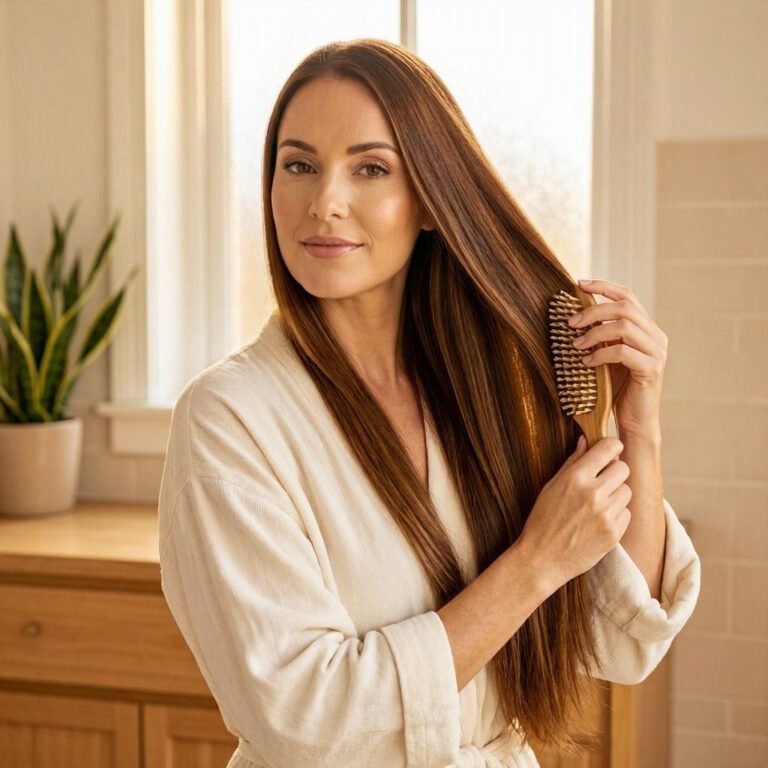
Dry hair often needs more than a quick application of regular conditioner. A dry hair deep conditioning treatment can give your hair a more intensive conditioning step, helping it feel softer, smoother, and easier to manage.
Unlike a regular conditioner used during most washes, a deep conditioning treatment is designed to stay on the hair longer and provide more intensive conditioning. It can be especially useful when your hair feels rough, dry, tangled, or difficult to manage.
The key is using the treatment correctly and choosing a frequency that works for your hair. Here’s how to deep condition dry hair without turning it into an unnecessarily complicated part of your routine.
What Is a Deep Conditioning Treatment for Dry Hair?
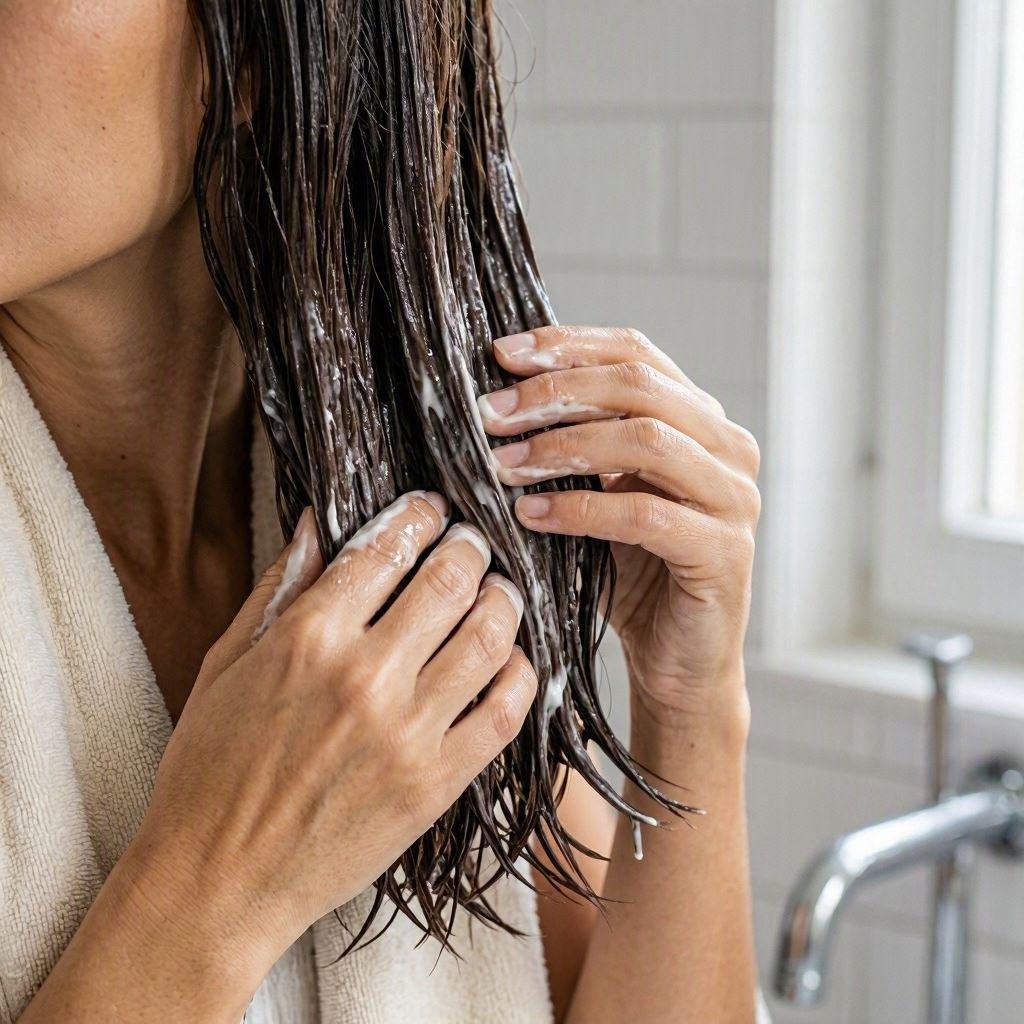
A deep conditioning treatment is a more intensive conditioning treatment that is left on the hair for longer than a typical rinse-out conditioner.
The purpose is primarily to improve the hair’s feel, softness, manageability, and appearance. Depending on the formula, a deep conditioner may contain ingredients designed to provide conditioning, smooth the hair surface, reduce the feeling of dryness, or temporarily improve the look and feel of damaged-looking hair.
Deep conditioning is not the same as permanently repairing damaged hair. Instead, it is a conditioning step that can help hair feel and look healthier.
For dry hair, the treatment can be particularly useful when regular washing and conditioning leave your hair feeling rough or lacking softness.
Why Does Dry Hair Benefit From Deep Conditioning?
Dry hair can feel coarse, rough, or difficult to detangle. It may also become more prone to frizz and tangling because it does not feel as smooth and manageable.
A deep conditioning treatment can help address some of these concerns by providing more intensive conditioning than a standard rinse-out conditioner.
Potential benefits include:
- Softer-feeling hair: Conditioning ingredients can make hair feel smoother and more comfortable to handle.
- Better manageability: Well-conditioned hair is generally easier to comb and style.
- Easier detangling: Added slip can make working through tangles easier.
- A smoother appearance: Conditioning can temporarily improve the look and feel of dry, rough hair.
- More comfortable styling: Hair that feels softer and more manageable can be easier to work with.
The results depend on the condition of your hair and the product you use. Deep conditioning is also not a substitute for addressing habits that contribute to dryness, such as excessive heat styling or overly harsh hair care.
How to Do a Deep Conditioning Treatment for Dry Hair
A good treatment does not need to be complicated. The most important part is applying the product properly and following the directions on the label.
1. Wash Your Hair
Start with clean hair unless the product specifically says that it should be applied differently.
Use your normal shampoo and rinse it thoroughly. You want to remove buildup and dirt so the conditioning treatment can be distributed through clean hair.
There is no need to aggressively scrub or repeatedly shampoo your hair. Over-washing can leave already-dry hair feeling less comfortable.
2. Remove Excess Water
Gently squeeze excess water from your hair before applying the deep conditioner.
Hair that is completely dripping wet can make it harder for the product to stay concentrated on the strands. You do not need to dry your hair completely, though. Slightly damp hair is usually easier to work with.
Avoid roughly rubbing your hair with a towel. Instead, gently squeeze or blot away excess water.
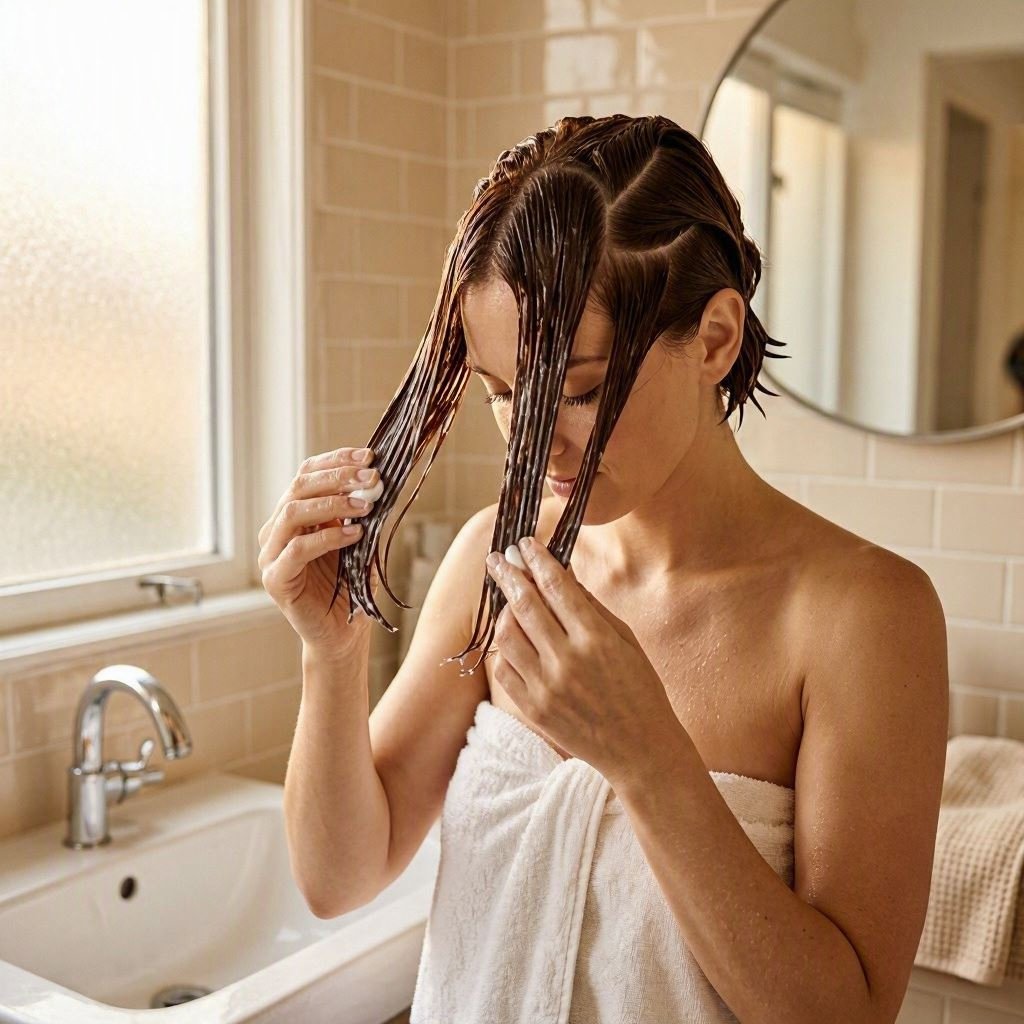
3. Apply the Deep Conditioner
Apply the treatment according to the product’s instructions.
For dry hair, concentrate on the lengths and ends if those areas are the driest. You generally do not need to coat your scalp heavily unless the product specifically recommends scalp application.
Start with a reasonable amount rather than assuming more product will produce better results. Very thick or long hair may require more than short or fine hair.
4. Distribute It Through Your Hair
Work the product through your hair so it is distributed evenly.
You can use your fingers to gently separate sections and work the conditioner through the lengths. If your hair tangles easily, take your time rather than pulling aggressively through knots.
For longer or thicker hair, dividing it into several sections can make application easier.
Pay particular attention to areas that consistently feel dry, rough, or difficult to manage.
5. Leave It On as Directed
Follow the processing time listed on the product.
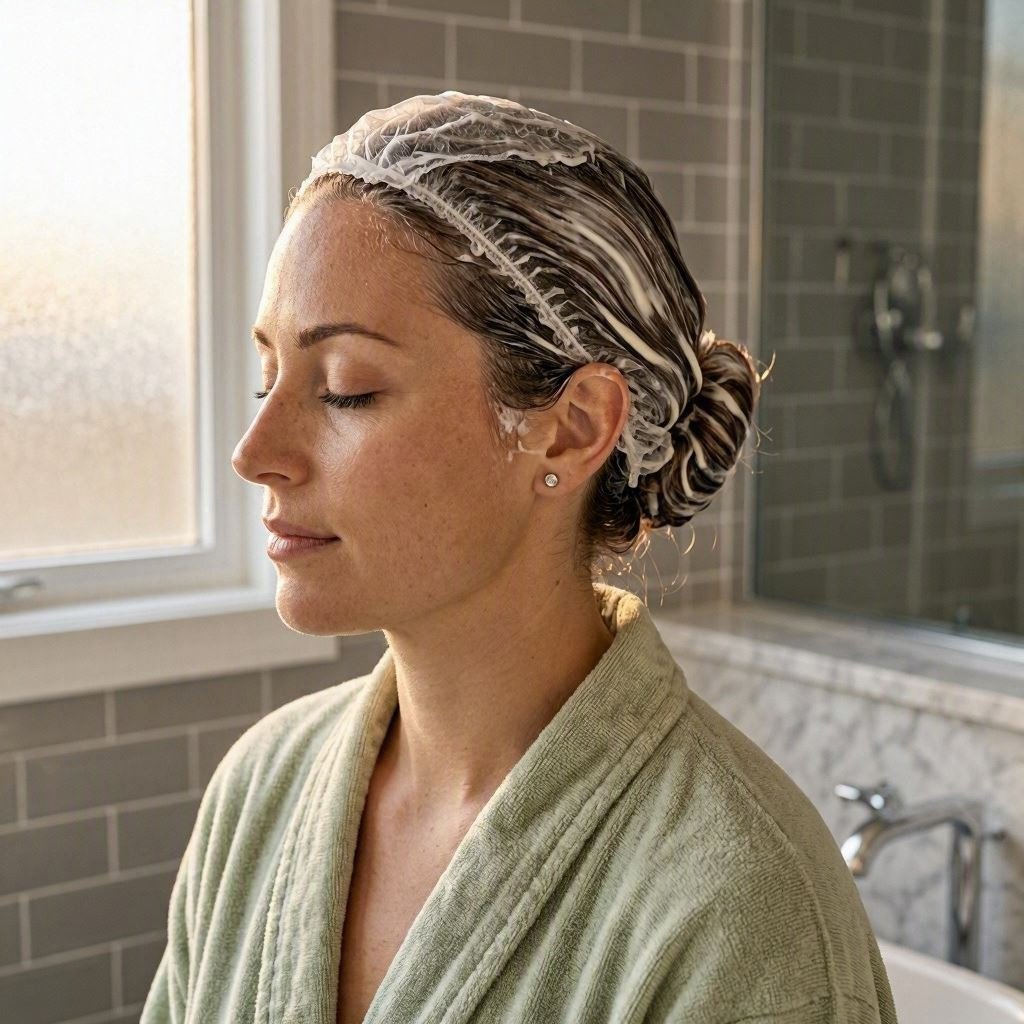
A common mistake is assuming that leaving a treatment on for much longer will automatically make it more effective. That is not necessarily true.
If the instructions say to leave the product on for a specific amount of time, follow those directions. Some products are designed to work relatively quickly, while others are intended to remain on the hair longer.
A shower cap may be recommended by some products, but you should follow the directions for the specific treatment you are using rather than adding extra steps automatically.
6. Rinse Thoroughly
Once the recommended time has passed, rinse the treatment out thoroughly.
Make sure you remove enough product that your hair does not feel coated or unnecessarily heavy. However, you also do not need to aggressively rinse or scrub your hair.
The goal is hair that feels conditioned and manageable, not weighed down by leftover product.
7. Handle Your Hair Gently Afterward
After rinsing, continue treating your hair gently.
Avoid rough towel drying and excessive brushing while the hair is wet. Gently remove excess water and use your normal styling method.
If your hair is prone to tangling, detangle carefully rather than forcing a brush through knots.
For more general guidance on maintaining healthy hair, see our hair care routine guide.
The deep conditioning treatment is only one part of caring for dry hair. What you do after washing can also affect how your hair feels.
How Often Should You Deep Condition Dry Hair?
There is no single schedule that works for everyone.
Some people with dry hair may benefit from deep conditioning approximately once a week, while others may need it less frequently. Your hair type, texture, washing frequency, product formula, and overall condition all matter.
Start with the frequency recommended on your product. Then pay attention to how your hair responds.
If your hair feels softer and more manageable after treatment, the frequency may be working well. If your hair starts feeling coated, heavy, limp, or difficult to style, you may be using too much product or deep conditioning too frequently.
More is not automatically better.
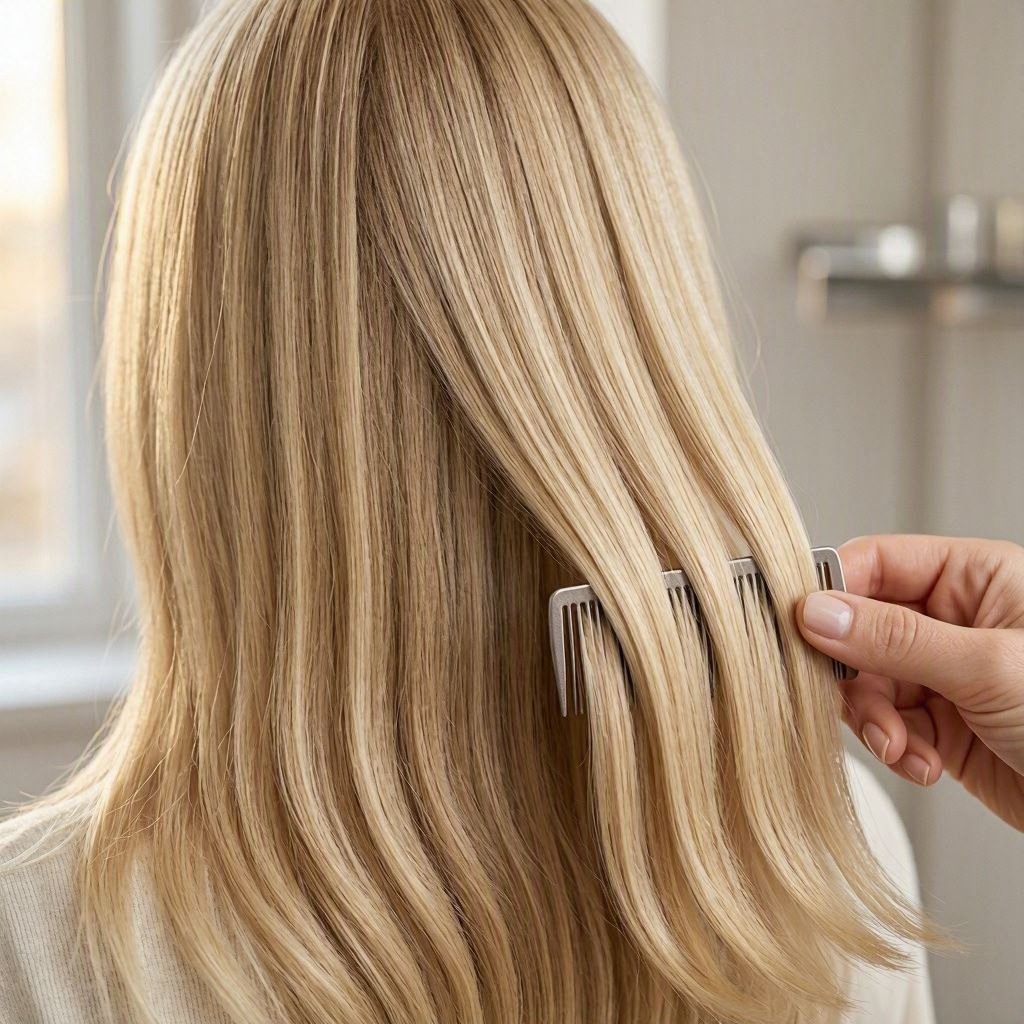
A consistent, moderate approach is usually more useful than repeatedly applying intensive treatments whenever your hair feels dry.
How often you wash your hair can also affect how often your hair needs intensive conditioning, so see our guide to How Often Should You Wash Your Hair? for more guidance.
Deep Conditioner vs. Hair Mask vs. Regular Conditioner
These terms are sometimes used interchangeably, which can make choosing a product confusing. If you want a dedicated pre-shampoo treatment, Philip Kingsley Elasticizer Deep-Conditioning Treatment is one option for dry, dehydrated hair.
Regular conditioner
A regular conditioner is generally used after shampooing and rinsed out during the same wash. It is intended to provide routine conditioning and improve manageability.
Deep conditioner
A deep conditioner is typically formulated as a more intensive conditioning step and is usually left on the hair longer than a regular conditioner.
Hair mask
Hair mask is a broader term. Some hair masks function similarly to deep conditioners, while others have different formulations and purposes.
Because product terminology varies between brands, do not rely only on the name printed on the bottle. Look at the directions and intended use.
For dry hair, the most important consideration is whether the product provides the type of conditioning your hair needs and whether you can use it comfortably as part of your routine.
Moisture vs. Protein for Dry Hair
Not every dry-feeling head of hair needs the same type of treatment.
Some products are primarily focused on conditioning and moisture, while others contain proteins or other ingredients intended to temporarily improve the feel and appearance of weakened hair.
This distinction matters because dryness and damage are not exactly the same problem.
If your main concern is hair that feels dry, rough, or lacking softness, a conditioning-focused treatment may be the more appropriate starting point.
If your hair is also heavily processed, chemically treated, or prone to breakage, you may need a broader approach to hair care rather than simply increasing the frequency of deep conditioning.
Avoid assuming that a product with more ingredients or a stronger-sounding claim will automatically work better for your hair.
Common Deep Conditioning Mistakes
Deep conditioning is fairly simple, but a few habits can make the process less effective.
Using too much product
Applying a huge amount does not necessarily improve the result. Start with enough to coat the hair appropriately and add more only if needed.
Leaving it on much longer than recommended
Longer is not always better. Follow the product’s instructions instead of automatically extending the treatment time.
Applying it heavily to the scalp
Many deep conditioners are intended primarily for the lengths and ends. Unless the product says otherwise, there is usually no reason to saturate the scalp.
Skipping the rinsing step
Leaving excessive product behind can make hair feel heavy or coated. Rinse according to the product directions.
Deep conditioning every day
Dry hair does not automatically require daily intensive treatments. Using an intensive treatment too frequently can leave some hair feeling heavy or coated.
Expecting permanent repair
A deep conditioner can improve the feel and appearance of hair, but it cannot permanently restore severely damaged hair to its original condition.
When Deep Conditioning Isn’t Enough
Deep conditioning can be a useful part of caring for dry hair, but it is not a complete solution for every hair problem.
If your hair remains extremely dry despite consistent conditioning, consider the rest of your hair-care habits. Frequent heat styling, chemical processing, excessive washing, rough handling, and other practices can contribute to dryness or damage.
The Tips for healthy hair from the American Academy of Dermatology also recommend gentle hair-care practices and limiting excessive heat.
Pool chemicals can also contribute to dryness; Cleveland Clinic notes that chlorine can dry out hair and recommends rinsing after swimming and using a moisturizing conditioner.
It is also important to distinguish between hair that simply feels dry and hair that is severely damaged or breaking.
If breakage becomes a major concern, increasing deep conditioning alone may not address the underlying issue. A gentler overall hair-care approach may be necessary.
The goal is not to keep adding more treatments. It is to find a routine that keeps your hair manageable without unnecessary manipulation or product buildup.
For more practical advice, explore our Hair Care guides for everyday washing, conditioning, and styling.
Frequently Asked Questions
Is deep conditioning good for dry hair?
Yes. Deep conditioning can provide more intensive conditioning than a regular rinse-out conditioner and can help dry hair feel softer, smoother, and easier to manage.
How long should you leave deep conditioner on dry hair?
Follow the instructions for your specific product. Different deep conditioners are formulated for different processing times, so there is no universal amount of time that applies to every product.
How often should you deep condition dry hair?
It depends on your hair and the product. Once a week can be a reasonable starting point for some people, but the recommended frequency on the product label and how your hair responds should guide your routine.
Can you deep condition dry hair every day?
Daily deep conditioning is generally unnecessary. Using an intensive treatment too frequently can leave some hair feeling heavy or coated. Follow the product directions and adjust according to how your hair responds.
Is a hair mask the same as a deep conditioner?
Not always. Some hair masks function similarly to deep conditioners, but the terms are not standardized across brands. Check the product’s intended use and directions rather than relying only on its name.
Can deep conditioning repair damaged hair?
Deep conditioning can improve the feel and appearance of damaged-looking hair, but it cannot permanently reverse severe structural damage. It is best viewed as a conditioning step within a broader hair-care routine.
Final Thoughts
A dry hair deep conditioning treatment can be a simple way to give dry hair a more intensive conditioning step without making your routine unnecessarily complicated.
Start with clean, slightly damp hair, apply the treatment evenly through the lengths, follow the recommended processing time, and rinse thoroughly. Most importantly, choose a frequency that suits your hair instead of assuming that more treatment will always produce better results.
When combined with gentle washing, careful detangling, and sensible styling habits, deep conditioning can help dry hair feel softer, smoother, and easier to manage.