Hair can start to feel dry, rough, dull, or difficult to manage when it is not getting enough conditioning or when everyday habits are making it harder to retain a soft, smooth feel. If your hair often feels dry between wash days, learning how to moisturize hair can help you build a simpler routine without piling on unnecessary products.
Moisturizing your hair does not mean applying heavy oils or rich treatments every day. The right approach can be as simple as using a suitable shampoo, conditioning after washing, adding a leave-in conditioner when needed, and being more careful with heat and handling.
The key is to find a balance that works for your hair type, texture, styling habits, and how your hair responds to different products.
What Does It Mean to Moisturize Hair?
When people talk about moisturizing hair, they usually mean helping hair feel softer, smoother, more flexible, and easier to manage.
Hair does not moisturize itself in exactly the same way skin does. Instead, hair care products can provide conditioning, improve slip, reduce the feeling of roughness, and help hair maintain a smoother feel.
This is why how to moisturize hair is not simply a matter of adding more water. A moisturizing routine can involve several different steps, including cleansing, conditioning, leave-in products, occasional intensive conditioning, and protecting hair from practices that can leave it feeling dry.
The goal is not to make your hair feel coated or greasy. It is to give your hair enough conditioning to keep it comfortable and manageable without creating unnecessary buildup.
7 Ways to Moisturize Hair
There is no single moisturizing method that works for everyone. Some people may need a lightweight conditioner, while others may prefer a leave-in product or occasional deep conditioning.
Here are seven practical ways to add more moisture and conditioning to your hair-care routine.

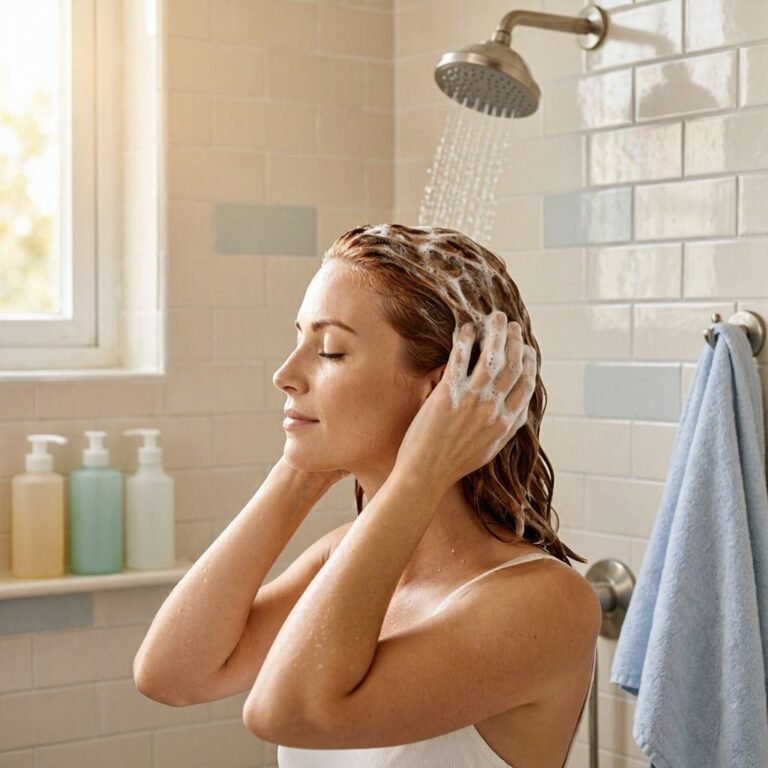
1. Use a Moisturizing Shampoo
Shampoo is designed to cleanse the hair and scalp, but the wrong formula can leave some hair feeling noticeably dry or stripped after washing.
If your hair frequently feels rough immediately after shampooing, consider using a formula designed for dry or moisture-depleted hair. A moisturizing shampoo can be a useful starting point because cleansing is the first major step in your wash routine.
However, a moisturizing shampoo does not need to leave your hair coated or heavily conditioned. The goal is simply to cleanse without creating an unnecessarily dry-feeling result.
When washing, concentrate on cleansing the scalp and allow the shampoo to rinse through the lengths rather than aggressively rubbing the entire length of your hair.
How often you shampoo also matters. If you wash frequently, your overall routine may need a lighter approach to conditioning. If you wash less often, you may prefer more conditioning during each wash.
For more guidance on finding a washing schedule, see our guide to How Often Should You Wash Your Hair?
2. Condition Your Hair After Shampooing
For many people, conditioner is one of the simplest ways to improve the feel and manageability of dry hair.
After shampooing, apply conditioner mainly through the lengths and ends. These areas often need more conditioning than the scalp, particularly when the hair is longer.
Leave the conditioner on for the amount of time recommended by the product. You do not necessarily need to leave it on much longer to get better results.
A good conditioner should make your hair easier to detangle and leave it feeling softer and smoother after rinsing.
If your hair feels weighed down after conditioning, try using a smaller amount or applying it more selectively through the lengths and ends.
If your hair still feels dry after regular conditioning, that does not automatically mean you need to use more conditioner every day. You may benefit more from changing the product, adding a lightweight leave-in conditioner, or occasionally using a more intensive conditioning treatment.
3. Try a Leave-In Conditioner
A leave-in conditioner can be useful when your hair needs additional conditioning after washing.
Unlike a rinse-out conditioner, a leave-in product is designed to remain on the hair rather than being completely rinsed away. Depending on the formula, it can help hair feel softer, smoother, and easier to comb or style.
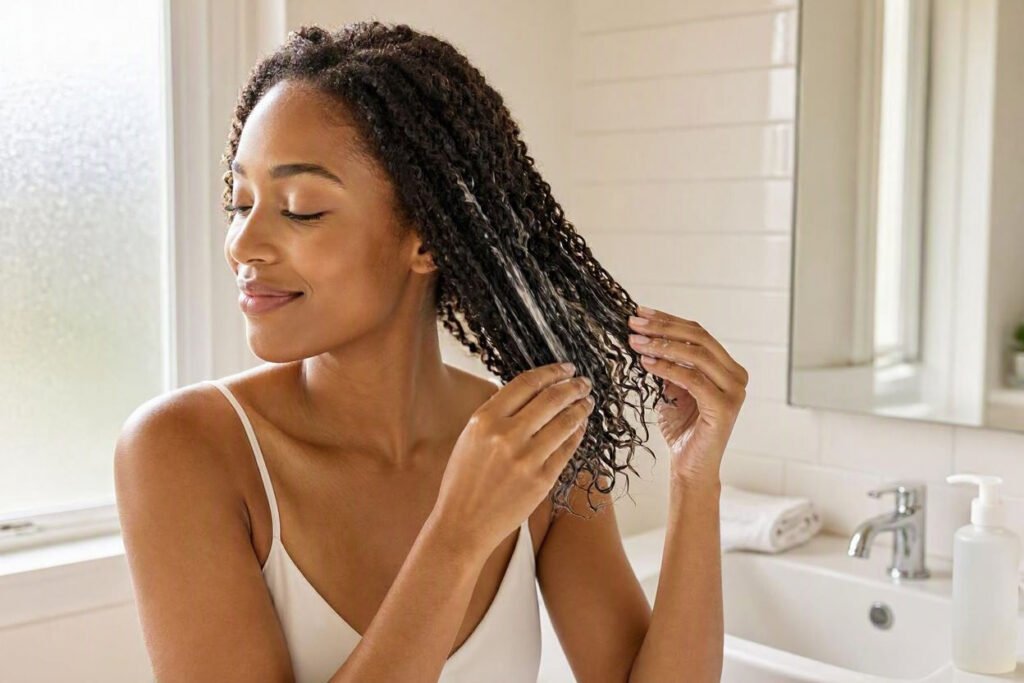
This can be especially useful if your hair tends to feel dry again shortly after washing.
Apply a small amount through the lengths and ends unless the product specifically says it can be used differently. Start with less product than you think you need. You can always add a little more, but using too much can leave hair feeling heavy or coated.
For this article, one leave-in option is Cortex Beauty Keratin Leave-In Conditioner for Dry & Damaged Hair. It can fit naturally into a moisturizing routine because it is designed as a leave-in conditioning step rather than as a replacement for shampoo or regular conditioner.
The important point is not that everyone needs a leave-in conditioner. It is simply another tool you can use when regular rinse-out conditioning does not provide the level of softness or manageability you want.
4. Add a Deep Conditioning Treatment When Needed
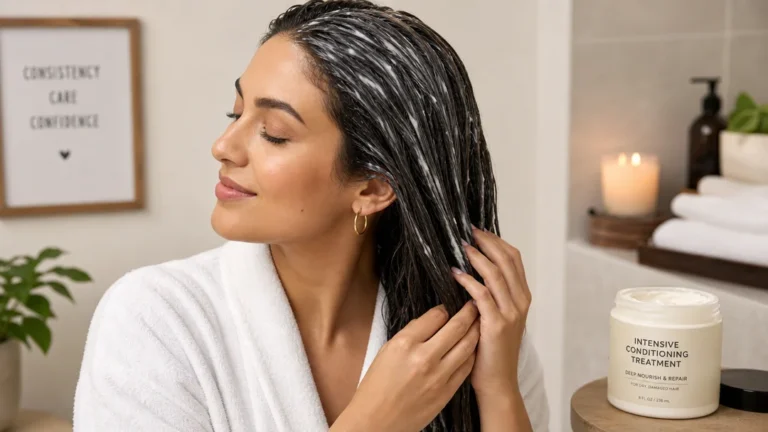
If regular conditioner is not enough to give your hair the feel you want, an occasional deep conditioning treatment can provide a more intensive conditioning step.
Deep conditioners are generally left on the hair longer than regular rinse-out conditioners and are intended to provide more intensive conditioning.
This does not mean that deep conditioning should replace your regular conditioner or become a daily treatment.
Your hair’s texture, condition, washing frequency, and the specific product all matter. Follow the directions for the product you are using and pay attention to how your hair responds.
If your hair feels softer and more manageable afterward, the treatment may be fitting well into your routine. If it starts feeling heavy, coated, limp, or difficult to style, you may be using too much product or using an intensive treatment too frequently.
For a more detailed guide specifically about this type of treatment, see Dry Hair Deep Conditioning Treatment.
5. Use Hair Oils Carefully
Hair oils are often associated with moisture, but oil and water are not the same thing.
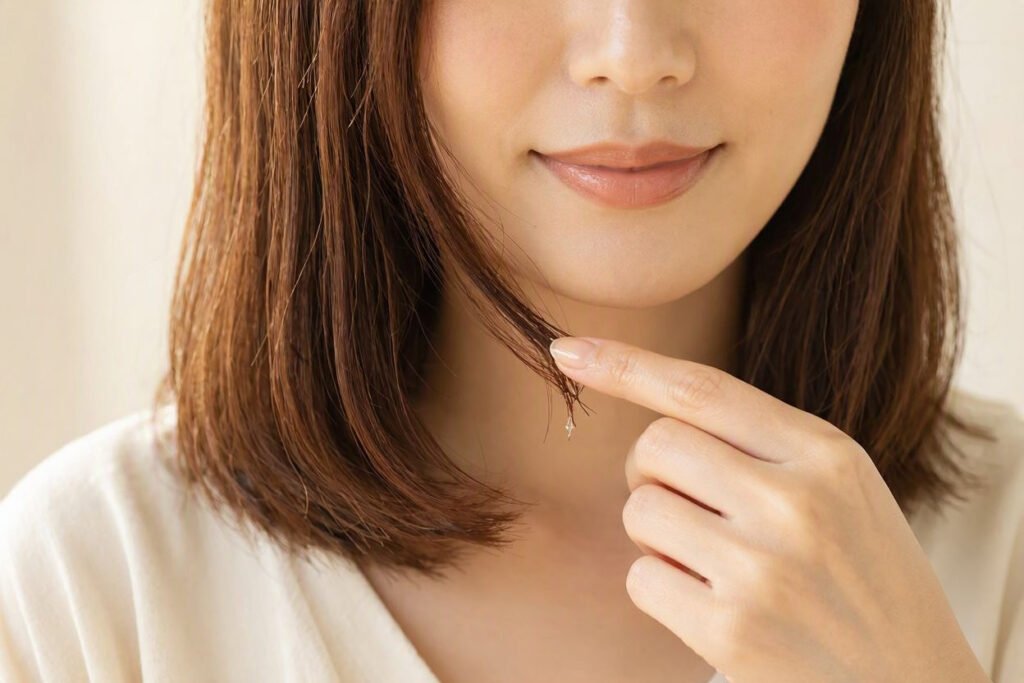
An oil can help improve the feel and appearance of hair, provide slip, and make dry-feeling lengths and ends feel smoother. However, applying a large amount of oil does not necessarily mean your hair is becoming more moisturized.
For this reason, use hair oil as a supporting step rather than assuming it needs to be the main source of moisture.
Start with a very small amount and apply it primarily where your hair feels driest. Fine hair may become weighed down quickly, while thicker or coarser hair may tolerate more product.
You can also use a small amount after applying a conditioning product if you like the way it improves softness and smoothness.
The right amount is the amount that gives you the result you want without leaving your hair greasy, sticky, or difficult to style.
6. Protect Your Hair From Excessive Heat
Heat styling can make it harder to maintain a soft, conditioned feel, especially when it is used frequently or at high temperatures.
If you regularly use a blow dryer, straightener, curling iron, or other heated styling tool, use the lowest effective heat setting and avoid repeatedly passing the tool over the same section of hair.
A heat-protective product can also be part of your styling routine when using heated tools.
You do not necessarily have to stop heat styling completely to improve your hair’s moisture routine. Reducing unnecessary heat and handling your hair more gently can make your overall routine easier to manage.
If your hair already feels dry, rough, or brittle, consider alternating heat styling with lower-manipulation styles and giving your hair occasional breaks from hot tools.
7. Handle Wet Hair Gently
Wet hair can be more vulnerable to stretching and rough handling, so your moisturizing routine should not stop once you turn off the shower.
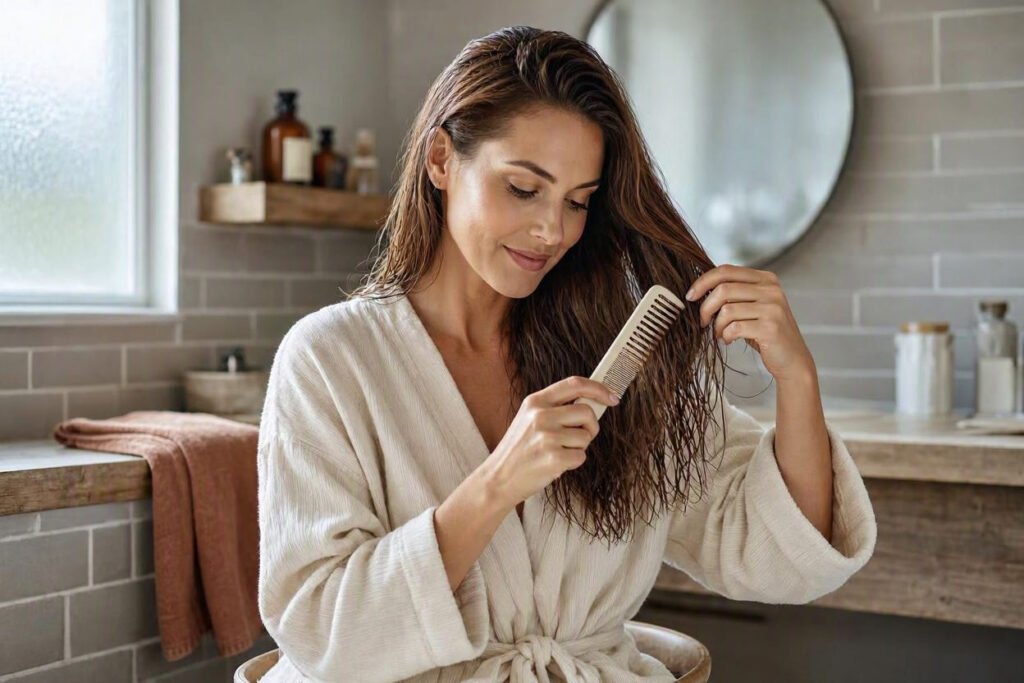
Instead of aggressively rubbing wet hair with a towel, gently squeeze out excess water. A soft towel or T-shirt can be used to reduce rough handling while drying.
When detangling, start near the ends and gradually work upward rather than pulling a brush or comb from the roots through a large tangle.
A leave-in conditioner can also provide additional slip before detangling if your hair tends to knot easily.
Small changes like these may seem unrelated to moisturizing, but they can help you maintain the softer, smoother feel you are trying to achieve with your conditioning routine.
Which Method Should You Use?
You do not need to use all seven methods every time you wash your hair.
The best approach is to combine the steps that actually improve how your hair feels and behaves.
| Method | What it does | When it may help |
|---|---|---|
| Moisturizing shampoo | Cleans while supporting a less dry-feeling wash | On wash days |
| Rinse-out conditioner | Adds routine conditioning and improves manageability | After shampooing |
| Leave-in conditioner | Provides additional conditioning after washing | When hair feels dry between washes |
| Deep conditioner | Provides a more intensive conditioning step | When regular conditioner is not enough |
| Hair oil | Can improve softness and smoothness | On dry-feeling lengths or ends |
| Heat protection | Helps reduce the impact of heat styling | Before using hot tools |
| Gentle handling | Helps reduce unnecessary pulling and roughness | Every day |
If your hair is only slightly dry, you may need nothing more than a suitable shampoo and conditioner.
If your hair becomes dry between washes, a leave-in conditioner may be more useful.
If your hair needs occasional extra conditioning, you can add a deep treatment without turning your entire routine into a complicated process.
How to Moisturize Hair Without Making It Greasy
One of the most common problems with moisturizing routines is using too much product.
More product does not automatically mean more moisture.
If your hair quickly becomes greasy or heavy, try making one change at a time:
- Use a smaller amount of conditioner.
- Keep heavier products away from the roots unless directed otherwise.
- Choose a lighter leave-in formula.
- Apply oils sparingly.
- Do not layer several rich products unless your hair actually needs them.
- Give each product a chance to show how your hair responds before adding another one.
It can also help to separate conditioning from styling.
For example, you may not need a rich cream, leave-in conditioner, oil, and styling product all at once. Sometimes a simpler combination produces a better result.
Your hair should feel conditioned and manageable, not covered in product.
How Often Should You Moisturize Your Hair?
There is no universal schedule for moisturizing hair.
Your routine depends on how often you wash your hair, your hair texture, the products you use, how much heat you use, and how your hair feels between washes.
For some people, conditioning after every wash may be enough.
Others may benefit from a leave-in conditioner between washes or an occasional deep conditioning treatment.
Instead of following a rigid schedule, pay attention to your hair.
If it feels soft, manageable, and easy to style, your current level of conditioning may be sufficient.
If it consistently feels rough, dry, tangled, or difficult to manage, consider whether you need to adjust your shampoo, conditioner, leave-in product, styling habits, or washing routine.
At the same time, avoid adding products simply because your hair feels dry on one particular day. Sometimes the issue is product buildup, excessive heat, rough handling, or another part of your routine rather than a lack of moisturizing products.
Does Water Moisturize Hair?
Water is obviously involved in keeping hair wet, but wetting your hair and conditioning your hair are not exactly the same thing.
Hair can become wet in the shower without staying soft and manageable after it dries.
This is why a moisturizing routine usually involves more than simply adding water. Conditioning products are designed to improve the feel, smoothness, and manageability of the hair.
If you frequently wet your hair without cleansing or conditioning it, pay attention to how it feels once dry. If repeated wetting leaves it tangled, rough, or difficult to style, changing the routine may be more useful than simply adding water more often.
Moisture vs. Hair Damage
Dry-feeling hair and damaged hair are related, but they are not exactly the same problem.
Hair can feel dry because of its texture, environmental exposure, styling habits, washing routine, or the way products interact with it. Hair can also become damaged through repeated chemical processing, excessive heat, or rough handling.
Adding more moisturizing products does not automatically reverse structural damage.
Conditioning can improve the feel and appearance of hair, but it should be viewed as part of a broader hair-care routine rather than a permanent repair for severely damaged hair.
If your hair feels dry, start by looking at the whole routine.
Are you using excessive heat?
Are you washing more frequently than necessary for your hair?
Are you aggressively brushing or towel-drying?
Are you using several heavy styling products?
Are you skipping conditioner?
Sometimes the simplest change can make a bigger difference than adding another product.
Common Mistakes When Trying to Moisturize Hair
Using too much product
Applying a large amount of conditioner, leave-in, or oil does not necessarily produce better results.
Start with a small amount and add more only if your hair needs it.
Putting every product on your scalp
Many conditioning products are intended mainly for the lengths and ends.
Unless the product specifically says otherwise, you generally do not need to saturate your scalp with conditioner, oil, leave-in products, and styling creams.
Using oil as a replacement for conditioner
Oil can be useful for softness and smoothness, but it does not serve exactly the same purpose as a rinse-out or leave-in conditioner.
If your hair needs conditioning, start with a conditioning product rather than relying entirely on oil.
Deep conditioning too often
Dry hair does not automatically require an intensive treatment every day.
Using too much of a rich treatment can leave some hair feeling heavy or coated.
Follow the product directions and adjust according to how your hair responds.
Ignoring heat styling
Adding more moisturizing products while continuing frequent, high-heat styling may not address the whole problem.
Look at the routine as a whole and reduce unnecessary heat where possible.
Changing several products at once
If you replace your shampoo, conditioner, leave-in, oil, and styling products simultaneously, it becomes difficult to know what is actually helping.
Changing one part of your routine at a time makes it easier to see how your hair responds.
A Simple Moisturizing Routine for Dry Hair
You do not need a complicated routine to keep dry-feeling hair manageable.
A simple starting point could look like this:
Wash day:
Use a shampoo suited to your hair, followed by a rinse-out conditioner.
After washing:
Gently remove excess water and apply a small amount of leave-in conditioner if your hair benefits from additional conditioning.
Styling:
Use heat protection before heated tools and keep the temperature as low as practical for the style you want.
Between washes:
If your lengths or ends feel dry, use a small amount of a suitable leave-in product or hair oil rather than repeatedly layering several products.
Occasionally:
Add a deep conditioning treatment when your hair needs more intensive conditioning.
This approach keeps the routine flexible. You can increase or reduce conditioning depending on how your hair feels rather than following a complicated schedule.
When Your Hair Still Feels Dry
If your hair continues to feel dry despite regular conditioning, look beyond the number of moisturizing products you are using.
Consider your shampoo, washing frequency, heat styling, chemical processing, brushing habits, towel drying, and the amount of product buildup in your hair.
Sometimes the answer is not another moisturizing product. It may be using less heat, handling the hair more gently, changing a product that is not working well for you, or simplifying your routine.
The American Academy of Dermatology recommends gentle hair-care practices and limiting excessive heat as part of general healthy hair care.
If you want to explore more everyday hair-care guidance, you can also browse our Hair Care category.
Frequently Asked Questions
How can I moisturize my hair naturally?
You can support softer, more manageable hair with gentle washing, regular conditioning, careful detangling, reduced heat exposure, and a small amount of an appropriate hair oil if your hair responds well to it. Natural does not automatically mean better, so focus on how your hair responds rather than whether an ingredient is natural.
How often should I moisturize my hair?
There is no single schedule that works for everyone. Some people may need conditioning every wash, while others benefit from a leave-in product between washes or occasional deep conditioning. Your hair texture, washing routine, styling habits, and product formula all matter.
Does oil moisturize hair?
Oil and water are not the same thing. Hair oil can help improve softness, smoothness, and manageability, but it should not automatically be treated as a replacement for a conditioning product. Use a small amount and see how your hair responds.
Can I moisturize my hair without washing it?
Yes. Depending on the product, a leave-in conditioner or a small amount of hair oil can be used between washes. Avoid repeatedly layering products if your hair starts feeling heavy, greasy, or coated.
Is leave-in conditioner good for dry hair?
A leave-in conditioner can be useful for dry-feeling hair because it provides additional conditioning after washing. Choose a formula appropriate for your hair and start with a small amount, especially if your hair is fine or easily weighed down.
Should I use conditioner every time I wash my hair?
For many people, regular conditioning after shampooing is a useful part of a hair-care routine. However, the amount and type of conditioner you need can vary. If your hair feels heavy or coated, try adjusting the amount or formula rather than assuming you need more.
Can I use hair oil and leave-in conditioner together?
You can, provided your hair responds well to the combination. Start with a small amount of leave-in conditioner and, if needed, use a very small amount of oil afterward. If your hair becomes greasy or heavy, reduce the amount or use only one product.
How do I moisturize dry ends?
Focus conditioning products on the lengths and ends rather than adding large amounts to the roots. A rinse-out conditioner, leave-in conditioner, or small amount of hair oil may help improve the feel and appearance of dry ends. Gentle handling and reduced heat can also be useful parts of the routine.
Final Thoughts
Learning how to moisturize hair does not require a complicated collection of products.
Start with the basics: use a suitable shampoo, condition after washing, and handle your hair gently. If your hair needs additional conditioning, consider a leave-in conditioner or an occasional deep conditioning treatment. Hair oil can be useful in small amounts, while reducing unnecessary heat can help support the overall routine.
The most important part is paying attention to how your hair responds.
If a routine leaves your hair soft, manageable, and easy to style, you may already have enough conditioning. If your hair still feels dry, make one change at a time rather than immediately adding several more products.
A simple, consistent routine is often easier to maintain than constantly changing products in search of more moisture.
Sources:
- For more dermatologist-backed guidance on everyday hair care, see the American Academy of Dermatology’s Tips for healthy hair.
- If you swim regularly, Cleveland Clinic explains how chlorine can affect hair and offers practical tips for protecting it before and after Protect Your Hair From Chlorine.